By Hassan A. Saliu
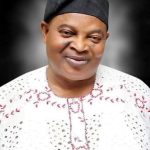
The circumstances surrounding Senator Saliu’s defection to the PDP and his emergence as the party’s senatorial candidate for Kwara Central present a compelling subject for political analysis. The central thesis of this intervention is that the Senator could have opted for the Accord Party or any of the less established parties and, in doing so, would have secured multiple, enduring strategic advantages. The immediate advantage he currently pursues is victory in the senatorial contest against the Governor. While difficult, it remains possible. If he succeeds, he will remain relevant in subsequent political cycles. However, indications already suggest his alignment with the PDP may not endure, given the party’s contradictions and those likely to arise. The projected outcome, all things being equal, is a possible diminution of his political capital. That, however, is not the focus of this intervention.
I contend that the Senator should have pursued the Accord ticket in the state for ten cogent reasons.
One, Accord currently enjoys the goodwill of the presidency, which it is leveraging to position itself for the next general elections. Judging by the political dynamics witnessed in Osun, Accord functions in practice as an adjunct of the APC. In that regard, assurances the Senator extended to the APC would have carried greater weight and meaning.
Two, given the personal and ego-driven dimension of this particular contest, the race is essentially a 50-50 proposition. From the political street, he is competitive. The critical question, however, is what happens in defeat. A loss would compel a return to the APC on diminished terms, and the narrative of his political invincibility would be punctured. Furthermore, if the APC retains power, his leverage will be reduced. In the unlikely event that the PDP wins at the centre, he will remain an outsider within the party. His gubernatorial aspiration may also be jeopardised, as the party is primarily focused on regaining power at this stage. That calculus will only change after that objective is attained.
Three, within the APC, despite current grievances against the Governor, the political environment remains relatively open. In contrast, the party he has joined possesses a more entrenched structure that is likely to constrain individual ambition within the hierarchy.
Four, a post-election exit from Accord back to the APC would have been politically easier, given the prospect of returning with an expanded base. A similar move from the PDP is feasible but offers far less political vista.
Five, even if Accord fails to deliver the senatorial seat, it would have provided a useful platform to test his popularity and to plan his long-term political trajectory. His present choice, by contrast, risks a strategic setback in the long run, all things being equal.
Six, on a reflective note, Waziri has subsumed Turaki. It is worth noting that the Turaki of earlier years would likely have demonstrated greater political sagacity on this matter. He was more astute and understood when to apply the brakes, even though he too, at times, found himself in circumstances similar to the Senator’s present position.
Seven, Turaki will expend considerable resources in his new romance with the PDP and may emerge as one of its financiers. Such financial commitment in a smaller and less visible party would have positioned him as a significant actor on that platform. That opportunity is now foreclosed, as the owners of the borrowed structure remain vigilant.
Eight, theoretically, there is nothing untoward in a politician skipping an electoral cycle if it serves a strategic purpose. In the Nigerian context, most politicians seek continuous relevance. President Tinubu’s 2007 example illustrates the wisdom of a tactical retreat. In the Senator’s case, the argument could have been made for remaining in the APC, where he might eventually have benefited from the existing structure that channels political possibilities. That prospect appears to have been forfeited by his defection.
Nine, additionally, he now bears responsibility for a large followership, both inherited and personal, with attendant expectations and demands. This creates a significant financial burden driven largely by ego rather than strategic gain.
Then, the question of his privileges at the federal level also arises. Whatever arrangements may have been made, some will certainly be lost. This consideration should have weighed heavily before the decision to defect. Unfortunately, the PDP, encumbered by its internal legal battles, is not in a position to compensate for that loss.
In concluding this intervention, one concedes that the defection may yield short-term benefits. However, viewed from a longer-term perspective, there is cause for concern regarding the trajectory Senator Saliu is charting and the kind of political future he envisions. All things being equal, these are the scenarios. The reality, however, is that things are not always equal.