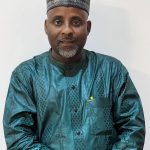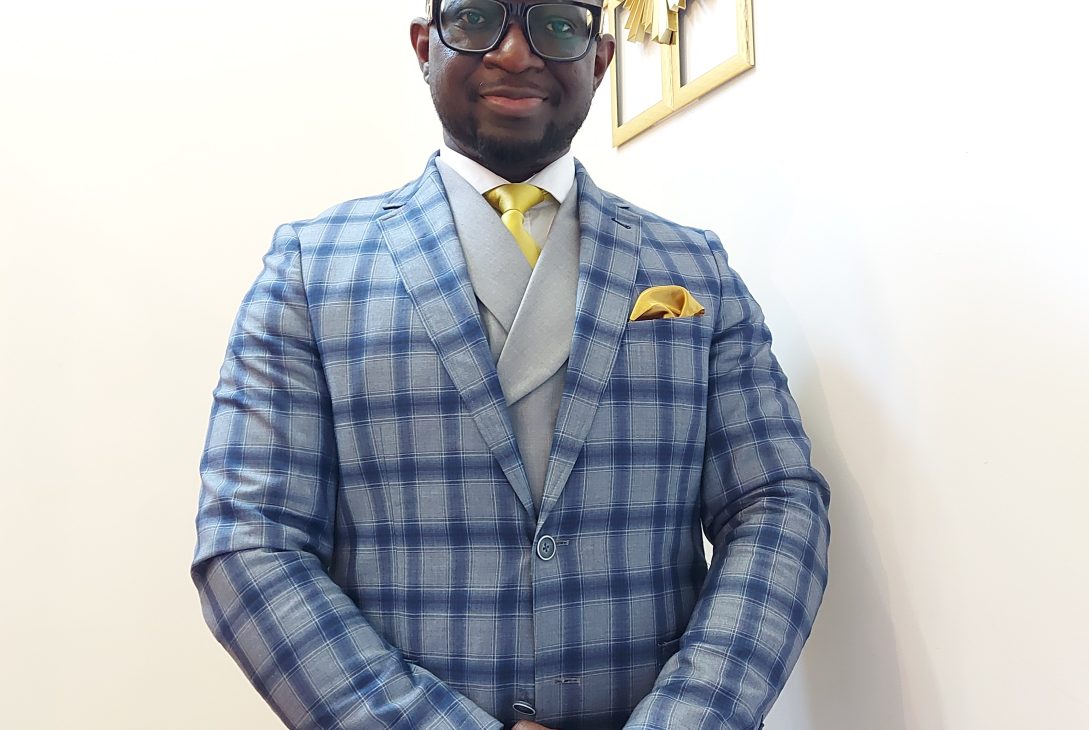
Olufemi Eyitope Bamidele, a Zaria-born Engineer and Research Scientist from Osi, Ekiti Local Government Area of Kwara State, is based in Canada. In this exclusive interview, Bamidele spoke on a wide range of issues including governance, insecurity and rising poverty among others. EXCERPTS:
Q- Can you tell us where you currently live and your area of specialization in the engineering profession?
I moved out of Nigeria for academic purposes about 2013. As a professional engineer, I used to be a member of the Nigerian Society of Engineers (NSE). My area of specialization is mechanical engineering. I’m into manufacturing and based in Ontario, Canada.
Q- What is your perspective about governance globally and Nigeria in particular?
Governance around the world is evolving rapidly and there has been various eras. I think the current era is where super powers are showing us ‘super powerism’ essentially, trying to take care of their own people. Previously, we used to be more segregated in governance, independence of various nations. Now, there is a trend with nations trying to acquire land mass, merge resources and collaborate.
There seems to be a little shift in ‘super powerism’ moving gradually from America to China and Russia. And there is a lot of war going on due to geographic challenges, cultural challenges and terrorism and all of that.
When it comes to Africa, we are much lagging behind. We are not in those phases yet, which is why Africa is more or less a promising land. Coming to back to Nigeria. Although Nigeria is so called the Giant of Africa, when we consider the trend, Nigeria is lagging behind. When it comes to governance in Nigeria top level, we have not even gotten started yet. That is basically my personal belief.
There are lot of gaps and issues to address. There is a lot of foundations to be built before we start running as a true democratic government.
Q- Obviously, you will be getting information back home. To you, how has Nigeria fared in almost three decades of her return to democratic dispensation?
Well, democracy in almost three decades that we returned to it, has been lukewarm. Lukewarm in the sense that sometimes it feels very promising, sometimes it feels very disappointing. And there are a lot of factors contributing to this. I think Nigeria is not as united as we perceived ourselves to be. That might be one of the factors. When you have someone from part of Nigeria ruling, there are some opposing forces from other parts of Nigeria, which contribute to minimizing the efforts being put in by the government within that dispensation.
We do have significant challenges that we need to deal with as you can see. There is huge uprising when it comes to terrorism, banditry and all of that right now. So, that is a major challenge for us. This is part of structural issue, infrastructural issue that we already have existing within our nation.
Olusegun Obasanjo’s dispensation was very promising up to the point of wanting to go for the third time. Umar Musa Yar’Adua’s dispensation was also very promising up to the point health challenge started creeping in. I think for that dispensation, we also had too many agenda on the table to deal with. That dispensation could have been done with a better focus. Probably, we bit more than we could chew at a time.
Goodluck Jonathan’s dispensation relatively compared to the current dispensation, there are good and bad sides of it. But at that time, there was freedom of democracy and freedom of speech and all that, which is one of the upsides of that dispensation. Like me, anybody could literarily go online and talk about the President anyhow, give their opinions about the President and governance. I don’t think we have that leverage of freedom as much right now.
Coming down to Muhammadu Buhari’s dispensation, things started really nosediving at a time. And now, we have President Bola Ahmed Tinubu trying to turn the situation around. He has made some good moves, implementation could have been a bit better. Removal of fuel subsidy for example. Great idea but implementation could have been better. Prioritization of power generation. Great idea but it could be better.
I think one of the blockers we have right now is banditry in addition to the lack of transparency relatively of the current governance. The Lagos-Calabar Coastal Highway is a huge one. Top level, looking at it from the outward perspective, you would say it is not as good as what we’ve experienced in the past excluding the Buhari’s dispensation.
Q- Taking a closer look at the multidimensional nature of insecurity in the country with non-state actors picking up arms and challenging government to a duel, some factors must have predisposed this. Can you look at those factors and offer antidotes if possible?
Absolutely! While not in governance, we could say a lot on the issues of security challenges. But as a citizen, we can look at the factors as the lack of transparency and the will to do with our government right now. Originally, banditry, for instance, started as a tribal or regional thing. It was more in the North and now, it is all over the place. It came to the North Central and now it is in the South; it is in Oyo State. It might go beyond that.
So, I think the lack of transparency and the will to do from the current government is huge. You can also tie it to Sunday Igboho. Recently, he was discussing with the Oyo State government. He wanted to go into the forest to try to address some of these issues. But you can see the lack of will from the government to strategize or collaborate with him to help resolve some of these issues.
There is also lack of effectual rule of law. You see various state players and non-state players making grievous comments. There are religious leaders across the country that incite terrorism directly or indirectly, and we have not really seen the effect of rule of law, picking up those people, making them accountable for their comments, and this encourages banditry, and it makes them become more powerful.
The selective use of our technology and legal system to address banditry and terrorism. I’m pretty sure that the Department of State Services (DSS) could really track the money flow, the weaponry flow within our system to be able to identify people responsible for sponsoring banditry and in identifying these bandits because they come online. Again, nobody is saying much about it. But when an innocent citizen makes comment about this thing, the next day, the DSS is on their Direct Message (DM) online. That speaks some volume.
So, there are several factors to it but the obvious ones; the low hanging fruits are those ones. If those are addressed significantly, then we can start seeing accountability. People begin to know that whenever they take actions, there will be repercussions. There will be less encouragement of these acts.
And of course, our security system is not properly structured. They are not even empowered. You wouldn’t send our military that doesn’t have as much firepower as terrorists to go and battle the terrorists. A couple of Military Generals and soldiers have been killed. That is not very encouraging. So, the will to do, to enforce the rule of law and then bringing in transparency are major steps that the government could take to really alleviate this, and then they can build upon that.
In addition to that, our current security system; the way we do policing, border security is not the best thing. It is very porous. Individuals could cross the border. So, I don’t believe all of these individuals that are perpetrating terrorism and act of banditry are from Nigeria. If you listen to their languages, you see the nature, who they are. Quite a number of them are not from Nigeria including the couple of ones that were displayed on television recently that were captured with their weapons.
So, having the right security network within the border and internally as well, I think that will help us curb these security challenges. Right now, we don’t know who is coming into the country and who is going out. We are not accountable whatsoever. Those are the basic things that we could do to really get started, taking the first step toward reducing these acts of terrorism and banditry.
Q- Some pundits hold the view that economic factor may also be responsible for insecurity with the rate of poverty in the land. It has been alleged that the non-state actors or abductors use part of the ransom collected from their victims to recruit people, particularly the jobless youth. How do you see the rising unemployment?
While I acknowledge the impact of poverty in crime, terrorism and others, I think that is one of the places we get it wrong in Nigeria. Situation and condition should, whatsoever, in no way, tailor us toward criminal acts. When we start crossing our boundary, we are in huge problem, which is where we are in Nigeria. I intentionally downplayed that because that shouldn’t even be considered. No one under no circumstance should use situation as an excuse to commit crime. When that starts happening, the moral decadence in the nation or society has really gone bad. So, it shouldn’t be an excuse.
While I’m not underplaying the economy that it is a factor (for insecurity), it shouldn’t really be when it comes to moral compass and considering Nigeria as a very religious country, that shouldn’t come to play. I’m not saying that is not happening but that shouldn’t be an excuse.
Q- Moving to Kwara, are you not worried about the rising insecurity in parts of Kwara South as a citizen that region?
It is highly concerning and perturbing. Kwara South used to be a quiet and more serene region of Kwara State. But right now, it is a no go area. Recently, our people praying overnight got kidnapped. It is crazy. Absolutely, it is an understatement to say ‘concern’, it is disturbing. The situation in southern part of Kwara State has deteriorated overtime because we have allowed that to happen.
Again, tying to what I said earlier. Before it came to this, a couple of months ago, it was in the news that some group of people went around Ajase-Ipo with an helicopter, came down and started killing people and all that. The government didn’t even address that, they downplayed it significantly. And we can see where we are right now. What is happening in Kwara South is very ridiculous and across the country. It just needs to be dealt with the same way.
Q- In recent times, we have seen how terrorists indiscriminately displayed ransom collected from their victims on social media handles. Would it be appropriate to conclude that government is helpless in apprehending the criminals?
I’m not saying government is helpless. No. Helpless would be a situation where someone wants to really do something but he is unable to do it due to certain situations. Nigeria is not helpless and Nigeria government cannot be helpless. That doesn’t make any sense at all. So, if any government official is saying that they are helpless, that is lack of accountability.
We have gotten a stretch of help from the United States as well. Recently, we have had good collaboration with the French government. And we do have ties with the United Kingdom. President Bola Ahmed Tinubu was there recently. So, it is not the lack of help. It is the will to do. I believe very strongly that if someone comes online to threaten the life of President Bola Ahmed Tinubu or any other government officials on social media, within 24 hours, that person will be picked up.
So, if we have the capability to do that, and we do have bandits that are coming online to display their lawlessness, to kill people publicly online, I think that speaks for itself. So, it is not being helpless. It is the will to do. Again, leaders are elected because we believe they have the capacity and capability to do it or at least, they can get the capacity and capability to do it. If the leaders we have are saying they are helpless to do it, there is something fundamentally wrong.
I’m not in government. So, I don’t know what their internal strategies are. But it is obviously not working. In terms of doing it, by now, we shouldn’t have people roaming about the streets with as simple as common knife. That is how serious we should take this. The military and the police should be empowered to take strict action. This is a state of emergency. It is not a regular thing.
If we had a military, and this is not inciting a military government should come on. But I believe if we have had a military government in place, it would be taken more seriously than this. So, what I’m saying in other words is whatever we are doing is not working, and the will to do is part of it.
In terms of mobilizing the team, some sensitive zones within Nigeria; the forest, the farms, the schools, the moment Chibok girls (in Borno) were kidnapped (in 2014), Nigerian schools should have been designated as high sensitive areas. This is what they do elsewhere outside of Nigeria. The same way we have the military armoured tanks staying in front of our Central Bank, we should have that in our schools in the first place.
The forest and all of those places should be fully patrolled without waiting for bandits to start using them. No forest should be left isolated. The local government areas, the towns should be fully patrolled and we should collaborate fully with the farmers, hunters, empower them to be able to fight for themselves. I think that is just coming up recently. You see hunters empowering themselves to go into the forest to fight. So, it is not being helpless. The strategy is not working and they are not willing to do the right thing.
Q- Before now, there has been agitation for the establishment of the state policing. But the fear in some quarters is that state police might become a willing to do in the hands of government of that state. What is your take on this?
State policing is a good direction to go. But if we implement it as we have right now, I don’t think it will still work. Nigeria is a system where the Judiciary and the Law Enforcement are not separated from the Administrative Arm. It wouldn’t work. So, if the state Governor, for example, has a say on who is appointed as Chief of Police, that doesn’t make any sense. If the state government has a say on who is appointed as a Chief of Justice of the state, that doesn’t make any sense.
Those institutions need to be separated.
The state policing is a good move. But it has to be implemented correctly. The legislative has to be separated from the Administrative Arm, and that is the way it will work. Otherwise it is just going to be all the same. Now, if the state government is in charge of the police, then they will do almost similar as federal government is doing with the police right now. So, it wouldn’t really work as expected unless those structural changes are made.
Q- Can you tell us about your view on politics and governance in Kwara State?
I’m happy about politics and governance in Kwara State because it has evolved over the last 15 years. The initial half of the current fourth Republic has been once dominated by a family, and we all know who the family is. Over the last 15 years, that has really evolved, and we have new leaders within the political scene in Kwara. So, that makes me happy.
However, there is a lot more to be done. I believe the youth and young minds need to be engaged significantly in Kwara and as well as Nigeria in general. It looks like we keep recycling leaders. We need fresh minds, fresh ideas to take us to the next level.
Also, another area we could improve is getting Kwara independent of the ruling party. Currently, Kwara is under the ruling party. So, that definitely is affecting the way we do politicking within Kwara State. So, making sure that there is enough competition within the local parties of the state, I think that will help drive more ideas and make people to be up to their toes in terms of people are watching them and expecting performance.
But Kwara State itself has seen significant development over the last 15 years, which is beautiful. We could make it a little better in terms of bringing in some diversity in our polity.
Q- Are you interested in politics?
Absolutely. I think we are at the point where everyone should be interested in politics. That is one of the problems we have. There has been some barrier and invisible gaps between the educated community within Nigeria and the politicking community within Nigeria, and with the educated and uneducated as well. Nigeria should get to a point where everyone is interested in what is happening in our nation and is willing to commit to improve the nation.
So, I am interested in politics, and my goal is to use my experience and skill set to improve Kwara State itself and the nation in general.
Q- Would you be leaving your comfort zone in Canada to come down to Nigeria if truly you are interested in politics?
No Nigerian outside of Nigeria would call their new home comfort zone. It is not comfort zone as much. It is where we find ourselves over the years, although the situation is different for a lot of people. For me, I actually did not plan traveling out. It just happened. I moved out before this wave of people need to move out of Nigeria. I moved out because I had an opportunity to study on scholarship.
When it comes to leaving Canada to go back to Nigeria to participate in politics, it is fine absolutely. Whatever would make us better as a people, I’m willing to do that. Even from here, I’m still active in understanding and identifying with the people at home, participating based on philanthropical activities at home and stuff like that.
So, yes, I’m definitely interested and involved. I will be leaving Canada to participate fully in Nigeria politics. It is not an issue. However, it is not a do or die thing for me. In a system where we have government that is not ready to do the right thing, I can only keep speaking and advocating for it. I’m not going to get myself entangled in corruption. I will rather be a part of the system that is willing to make things work than identifying with people that are not doing the right thing because I want to get into politics.
Visited 17 times, 1 visit(s) today