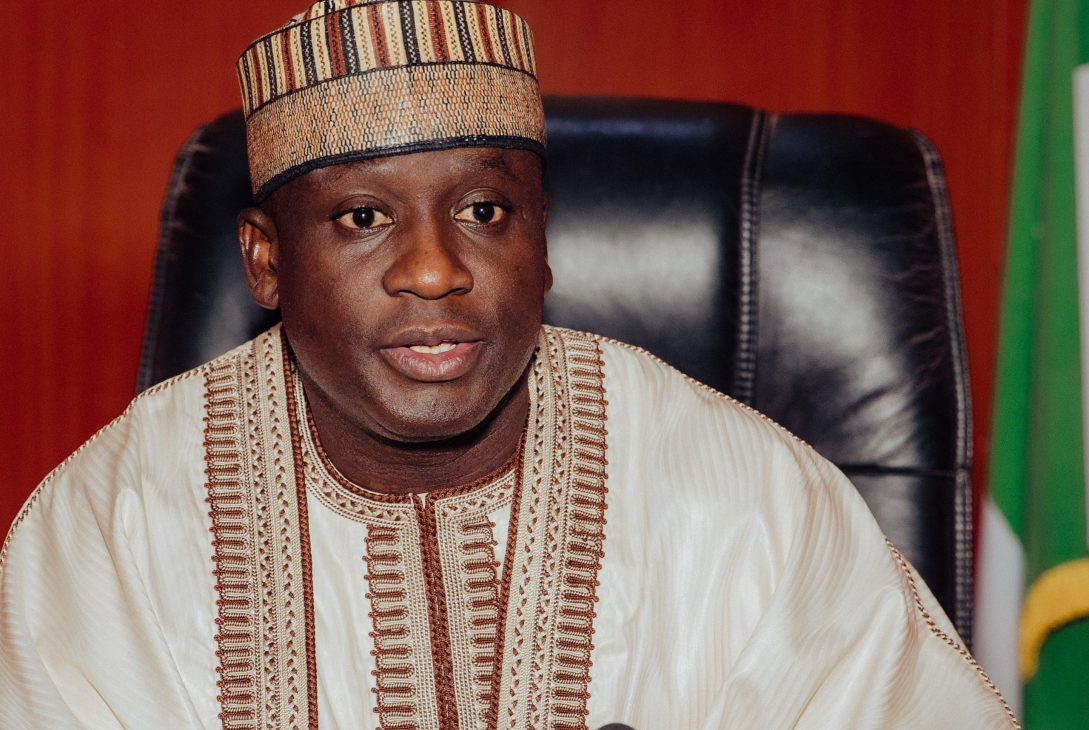
Professor Hassan A. Saliu HM-NPSA, FNPSA
Department of Political Science, University of Ilorin.
A Keynote Address delivered at the One Kwara Project Stakeholders’ Engagement held at the Banquet Hall, Ilorin, on 9th July, 2026.
Opening Remarks
I want to thank the organisers of this programme for inviting me to serve as keynote speaker on Power Shift and its Implications for Inclusive Development in Kwara State.
The topic chosen for our conversation this morning is both apt and relevant to our immediate environment. As we are all aware, developments within the polity have exposed divisions, particularly within the All Progressives Congress (APC) over the choice of its candidate for the governorship of the state.
Opinions are divided. One camp is anchoring its argument on numerical strength and demographic weight, and therefore believes that the party’s candidate for the exalted office of governor should have emerged from Kwara Central Senatorial District. There is nothing undemocratic about that position. In a democracy, every group is entitled to canvass its preference.
Representing the other divide are those who argue that power should rotate across the three senatorial districts in the spirit of fairness, equity and inclusion. This perspective is also common in politics.
While politics is indeed a platform for the articulation and pursuit of interests, it is also a competitive arena. Multiple interests co-exist, and each seeks to prevail at any given time. However, politics is not a platform for absolute equality. Social stratification or the reality plays a major role in the attainment of political objectives. It is therefore to be expected that some significant political actors will have their preferences accommodated, sometimes at the expense of other interests.
At this point, let me congratulate Honourable Salihu Danladi for emerging as the flag bearer of the APC in Kwara State. It was not an easy journey for the party to reach this destination, even though there are matters arising.
The Concept of Power Shift
Power shift is a concept that resonates across transitional democracies where formal mechanisms for political balancing are not always entrenched, as we find in some states in Nigeria. Power shift recognises the need for political power to rotate across the constituent parts of a polity. If one area has held power for a period, another area should have the opportunity at another time. Diversity and a sense of belonging are the principles that drive it.
This is the experience we have at the national level, where power has alternated between the North and the South. Some scholars argue that zoning or power rotation is undemocratic because it constrains the electorates choices. That argument has merit.
However, given our relatively short democratic experience and the low level of national integration, where identity politics remains strong, power rotation has become a pragmatic instrument for fostering national integration and political stability.
Ordinarily, power should shift naturally through electoral competition. However, politicians’ attitudes and the mechanics of managing the process often raise concerns. There are always rough edges and conflicts to contend with. I doubt if any serious argument can be made to justify power residing in one part of a state or country for too long. All things considered, there should be mobility in the acquisition of power to ensure stability that will engender development.
Lessons for Kwara State
My message to our politicians is twofold. First, there should be deliberate efforts to carry all critical stakeholders along in the process of shifting power. Consultation, dialogue and consensus-building are not signs of weakness. They are the bedrock of cohesion. Second, there should be consistency and clarity in the direction of party primaries. Raising aspirants’ hopes only to dash them at the end complicates matters and threatens party unity. It also breeds resentment that can undermine governance after elections.
Inclusive development can only occur when every part of Kwara State feels it has a stake in the system. Power shift, when properly managed, provides that assurance. It is not a guarantee of performance, but it is a guarantee of access, representation and belonging. Speaking the minds of Nigerians on this occasion, one argues that the majority do not really care where the president or governor comes from. All that bothers them is a remarkable improvement in their standard of living.
.
The Concept of Inclusive Development
There is a growing body of literature on the concept and phrase “inclusive development.” While its dimensions are varied and multidimensional, let me focus on political engagement for this discussion.
By inclusivity, I mean a situation in which no one is deliberately left at the bus stop in the political process. All voters and citizens must be considered in both the electoral process and the eventual governance of the state. There should be no discriminatory policies in place designed to disenfranchise anyone, especially women, youths, other marginalised groups, or geographical zones. All the demographics should be deliberately catered for at all levels of political engagement. The requirements for participation in politics must be fair and accessible to all, including Persons Living with Disabilities.
Inclusivity does not end at the ballot box. People should not be left permanently at the polling booths until another round of elections comes around. The true test of inclusivity manifests in the governing process. This represents the second leg of politics, and it speaks more directly to the developmental outcomes of democracy.
In popular democracy — an aspiration we have yet to achieve fully, and which other nations continue to strive for — any discriminatory policy truncates the process of attaining it. Therefore, when assessing democracy worldwide, inclusiveness remains a key indicator.
Every part of the state, under proper governance, has something to contribute to development. It is inadequate governance that results in less appreciation of this fact and, in turn, breeds alienation and underdevelopment.
The Link to Power Shift
Power shift without inclusive development is an empty ritual. Rotating power across senatorial districts must be matched with rotating opportunities, projects, and representation in governance. That is how we move from mere power sharing to genuine development that leaves no one behind. The challenge lies in justifying a shift in power for inclusive development in concrete terms, not in theory.
Roadblocks to Inclusive Development in Kwara State
At this point, let me highlight a few roadblocks to inclusive development in Kwara State in particular and the nation at large—first, unfair distribution of projects. The business of democracy does not end at the casting of ballots. Voters who troop out to vote on election day expect concrete evidence of development to compensate them for their sacrifice. They expect to see transformative projects spread across the state. Where this is not the reality, they withdraw support from government, with attendant costs to stability, cohesion and security.
Second, lopsided appointments. Appointment opportunities should be spread equitably across the state. Where this is not done, it widens the gulf between government and the people, and translates to underdevelopment. Development is about the people, and once they are excluded, their contributions to it will be near zero.
Third, corruption and perception of self-interest. The perception that people in government are only there for themselves is common among Nigerians. Corruption therefore stands as a constant threat to inclusiveness. It diverts resources meant for the public good and leaves the people at the margins of development.
Fourth, constraints in the electoral process. These manifest in many forms: prohibitive nomination fees, godfatherism, unfair political environment and unmet expectations regarding governance performance. Nigerians seem increasingly unhappy with the records of their successive leaders.
Fifth, violence and thuggery. These two phenomena have become common in Nigeria’s politics. They have turned many citizens away from participating fully in their obligations to the state.
Sixth, inadequate consultations/ low level of engagement. People feel their governments are too far from them.
Seven, governments formulate policies and programmes without seeking inputs from them.
Promoting Inclusive Development in Kwara State
The issue of inclusive development has not been accorded its pride of place in Nigeria. There is a world of difference between growth and development. While growth statistics are important, development is broader and directly addresses inclusiveness, accelerating socio-economic outcomes.
Apart from a clear policy framework, there are immediate steps that can be taken to ensure all hands are on deck to herald all-round development in Kwara. These include:
1. Institutionalise Power Rotation: Make power shift across the three senatorial districts a party and state policy, not an ad-hoc arrangement. This development builds predictability and trust.
2. Equitable Project Allocation: Adopt a template that ensures capital projects, federal appointments, and state resources are fairly distributed. Let every senatorial district see itself in the budget and policies.
3. Affirmative Action for Marginalised Groups: Create clear quotas and support systems for women, youths, and Persons Living with Disabilities in party structures and in government.
4. Strengthen Citizen-Government Engagement: Governance must be continuous. Town halls, feedback mechanisms, and constituency offices should bridge the gap between elections.
5. Zero Tolerance for
corruption: Inclusive
development cannot
thrive where public
resources are
diverted.
Transparency and
accountability
must be
non-negotiable.
A Word for the APC in Kwara State
Since this is an occasion involving one of the candidates that will soon face the electorate, it is incumbent on me to speak directly. The fire currently burning in the APC in Kwara State must be put out as soon as possible.
The path of genuine reconciliation commends itself for immediate consideration. A significant number of party members are unhappy with developments so far. To ignore this is to risk the party’s collective gains.
A cursory look at Nigeria today reveals a high level of discontent among the citizenry. Good governance anchored on inclusiveness is the antidote to reverse that trend. For Kwara APC, unity, equity, and inclusion must be the watchwords as we approach the next electoral cycle.
Conclusion
Inclusive development is the true dividend of power shift. If Kwara must develop, then every part of Kwara must develop. If Kwara must be stable, then every son and daughter of Kwara must feel a sense of belonging that translates into attaining any political/administrative position and enjoying democratic dividends. Let us therefore commit to a Kwara where power moves, opportunities spread, and no one is left behind.
Honourable Danladi, as a candidate in the forthcoming gubernatorial elections in the state, faces enormous responsibilities. If elected, one of those responsibilities is to entrench inclusiveness in the governance of Kwara State to justify the shift in power in the state.
As a sign of what to expect from him, he should show readiness to do the needful by being inclusive right from the start. Bring the aggrieved members of the APC into the fold. That will be an excellent way to demonstrate the importance of a shift in power and inclusiveness, which will ultimately bring about development in the state.
Thank you all, and God bless Kwara State.